Chronicle of Henry of Livonia

Henry of Livonia (Henricus de Lettis) · c. 1227 · Latin

Chronicle of Henry of Livonia

Heinrici Chronicon Livoniae

c. 1227 · Henry of Livonia (Henricus de Lettis) · Latin · 222 pages

The most important eyewitness account of the Northern Crusades in the Baltic. Written by a priest who participated in the events, it covers the Christianization of Livonia from 1184 to 1227 — the founding of Riga, the establishment of the Livonian Brothers of the Sword, wars with the native Livonians, Letts, and Estonians, and the arrival of the Teutonic Order. Henry’s vivid Latin prose records battles, baptisms, diplomacy, and daily life on Christendom’s northeastern frontier.
Page p0011 of 222
Page p001

Original (Latin)

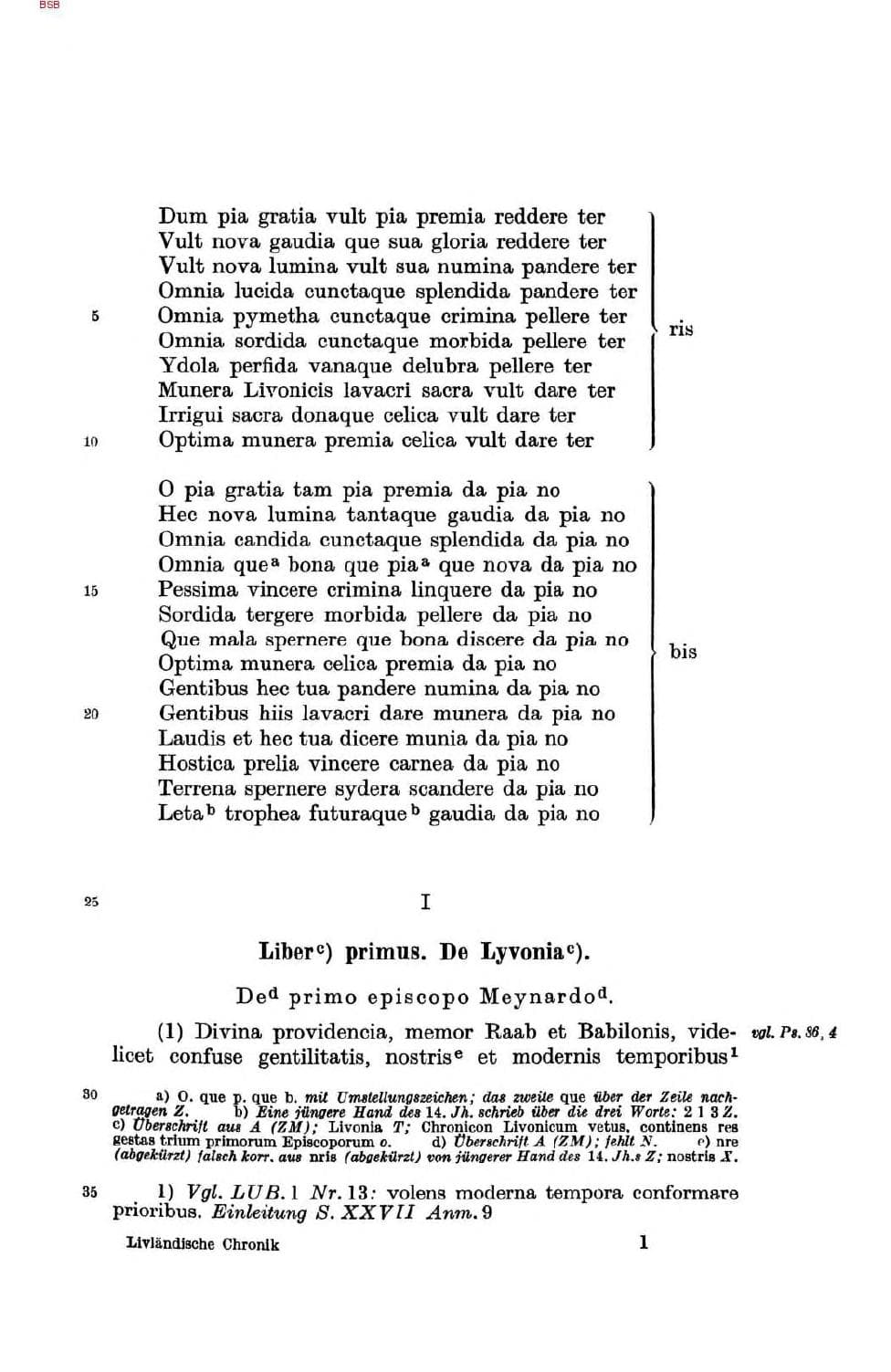
Dum pia gratia vult pia premia reddere ter Vult nova gaudia que sua gloria reddere ter Vult nova lumina vult sua numina pandere ter Omnia lucida cunctaque splendida pandere ter Omnia pymetha cunctaque crimina pellere ter Omnia sordida cunctaque morbida pellere ter Ydola perfida vanaque delubra pellere ter Munera Livonicis lavacri sacra vult dare ter Irrigui sacra donaque celica vult dare ter Optima munera premia celica vult dare ter O pia gratia tam pia premia da pia no[bis] Hec nova lumina tantaque gaudia da pia no[bis] Omnia candida cunctaque splendida da pia no[bis] Omnia que bona que pia que nova da pia no[bis] Pessima vincere crimina linquere da pia no[bis] Sordida tergere morbida pellere da pia no[bis] Que mala spernere que bona discere da pia no[bis] Optima munera celica premia da pia no[bis] Gentibus hec tua pandere numina da pia no[bis] Gentibus hiis lavacri dare munera da pia no[bis] Laudis et hec tua dicere munia da pia no[bis] Hostica prelia vincere carnea da pia no[bis] Terrena spernere sydera scandere da pia no[bis] Leta trophea futuraque gaudia da pia no[bis] I Liber primus. De Lyvonia. De primo episcopo Meynardo. (1) Divina providencia, memor Raab et Babilonis, videlicet confuse gentilitatis, nostris et modernis temporibus

English Translation
[OPENING HYMN — A liturgical poem invoking divine grace for the Livonian mission] When pious grace wishes to bestow pious rewards — thrice repeated, Wishes to bring new joys which its glory may bestow — thrice, Wishes to reveal new lights, wishes to reveal its divine powers — thrice, All things bright and all things splendid to reveal — thrice, All sins and all crimes to drive away — thrice, All filth and all sickness to drive away — thrice, Treacherous idols and empty shrines to cast down — thrice, To the Livonians the sacred gifts of baptism it wishes to give — thrice, The holy waters and heavenly gifts it wishes to give — thrice, The finest rewards, heavenly prizes it wishes to give — thrice. O pious grace, such pious rewards grant to us, These new lights and such great joys grant to us, All things pure and all things splendid grant to us, All things good, all things holy, all things new grant to us, To conquer the worst evils, to abandon sin, grant to us, To cleanse what is foul, to drive away sickness, grant to us, To spurn what is evil, to learn what is good, grant to us, The finest rewards, heavenly prizes grant to us, To reveal your divine powers to these peoples, grant to us, To give the gifts of baptism to these peoples, grant to us, To declare the duties of your praise, grant to us, To conquer the hostile battles of the flesh, grant to us, To spurn earthly things, to ascend to the stars, grant to us, Joyful triumphs and future joys, grant to us. [BOOK ONE — CONCERNING LIVONIA] [Chapter I: Concerning the first Bishop Meinhard] (1) Divine Providence, mindful of Rahab and Babylon — that is, of confused paganism — in our own modern times... [Henry opens his chronicle with a theological invocation. Citing Psalm 86:4, he frames the entire Livonian mission as God's plan to awaken the idol-worshipping Livonians from the "sleep of idolatry and sin" through the fire of His love. This sets the ideological foundation: the chronicle is not merely a historical account but a salvation narrative.]
Page p0022 of 222
Page p002

Original (Latin)

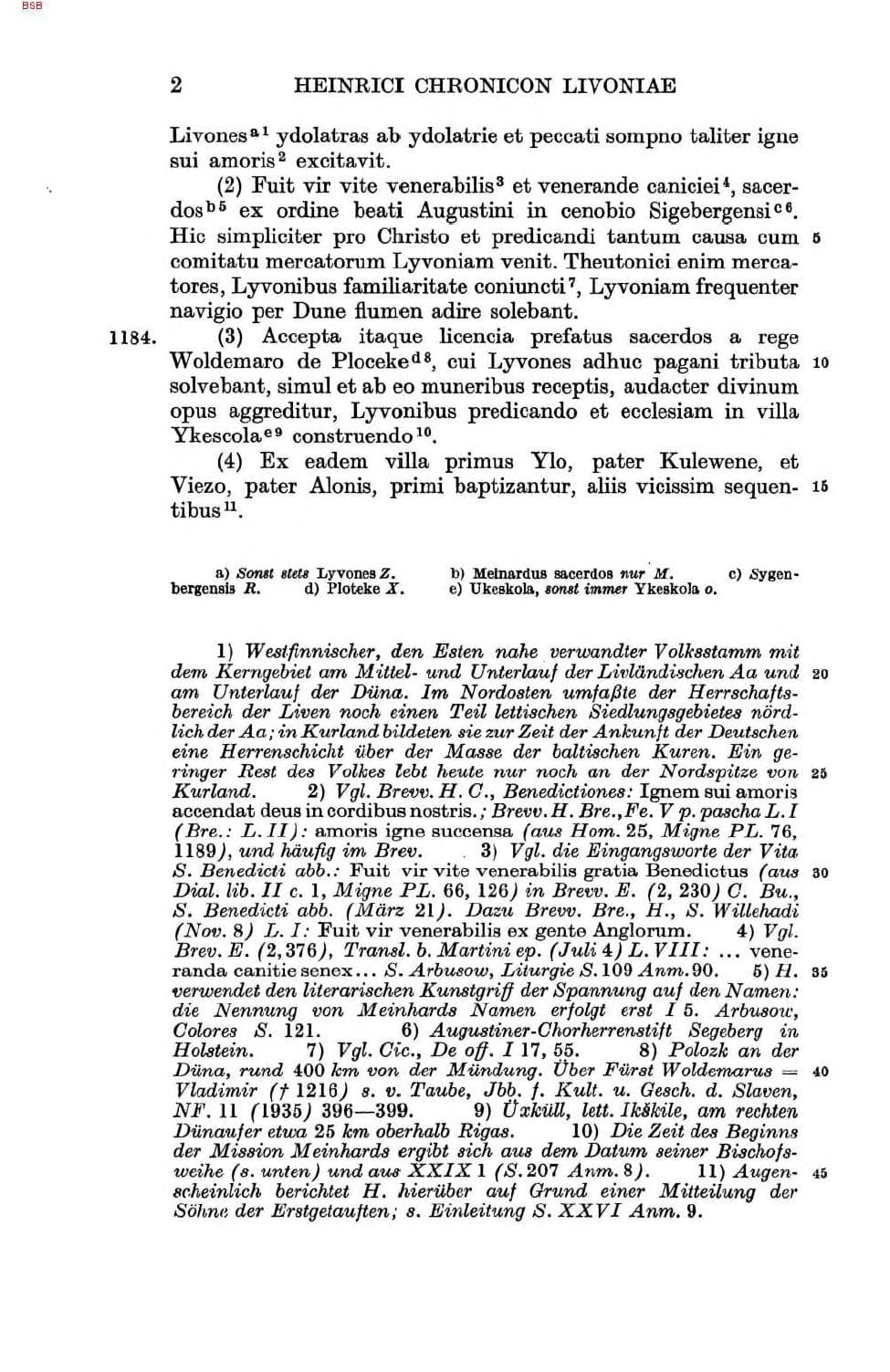
Livones ydolatras ab ydolatrie et peccati sompno taliter igne sui amoris excitavit. (2) Fuit vir vite venerabilis et venerande caniciei, sacerdos ex ordine beati Augustini in cenobio Sigebergensi. Hic simpliciter pro Christo et predicandi tantum causa cum comitatu mercatorum Lyvoniam venit. Theutoniei enim mercatores, Lyvonibus familiaritate coniuncti, Lyvoniam frequenter navigio per Dune flumen adire solebant. (3) Accepta itaque licencia prefatus sacerdos a rege Woldemaro de Ploceke, cui Lyvones adhuc pagani tributa solvebant, simul et ab eo muneribus receptis, audacter divinum opus aggreditur, Lyvonibus predicando et ecclesiam in villa Ykescola construendo. (4) Ex eadem villa primus Ylo, pater Kulewene, et Viezo, pater Alonis, primi baptizantur, aliis vicissim sequentibus.

English Translation
...awakened the Livonians, worshippers of idols, from the sleep of idolatry and sin by the fire of His love in just such a manner. (2) There was a man of venerable life and revered old age, a priest of the order of Blessed Augustine in the monastery of Segeberg [in Holstein]. He came to Livonia simply for Christ's sake and solely to preach, in the company of merchants. For German merchants, bound by long familiarity with the Livonians, were accustomed to travel frequently to Livonia by ship up the Daugava River. [This is Bishop Meinhard, a canon of the Augustinian monastery at Segeberg in Holstein (modern Schleswig-Holstein, Germany). Henry's description "vir vite venerabilis" (a man of venerable life) deliberately echoes the opening of the Vita of Saint Benedict, signaling that Meinhard is being cast as a holy figure from the outset.] (3) Having received permission from King Woldemar of Polotsk — to whom the still-pagan Livonians paid tribute — and having also received gifts from him, the aforesaid priest boldly undertook the divine work: preaching to the Livonians and building a church in the village of Üxküll. [Üxküll (Ikšķile) sits on the right bank of the Daugava, about 25 km upstream from modern Riga. The reference to King Woldemar of Polotsk is significant: the Livonians were tributaries of the Slavic principality of Polotsk, and Meinhard needed the prince's consent to operate. This detail reveals the complex political landscape the German missionaries entered — they were not arriving in a power vacuum.] (4) From that same village, Ylo — father of Kulewene — and Viezo — father of Alo — were the first to be baptized, with others following in turn. [The first Livonian converts are named: Ylo and Viezo, identified by their sons' names (a common Livonian naming convention). Henry likely learned these names from baptismal registers maintained at Üxküll. Year: 1184.]
Page p0033 of 222
Page p003

Original (Latin)

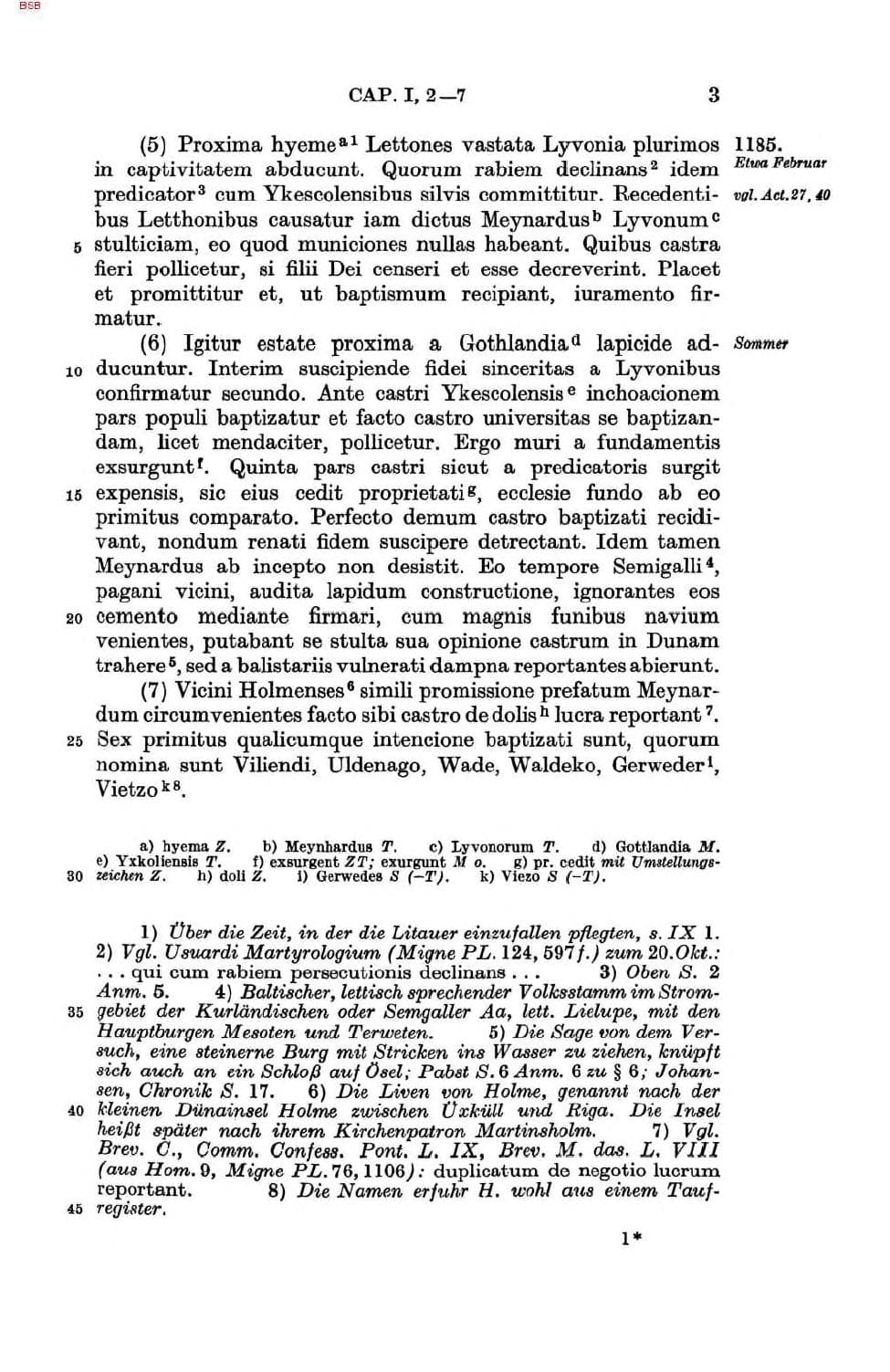
(5) Proxima hyeme Lettones vastata Lyvonia plurimos in captivitatem abducunt. Quorum rabiem declinans idem predicator cum Ykescolensibus silvis committitur. Recedentibus Letthonibus causatur iam dictus Meynardus Lyvonum stulticiam, eo quod municiones nullas habeant. Quibus castra fieri pollicetur, si filii Dei censeri et esse decreverint. Placet et promittitur et, ut baptismum recipiant, iuramento firmatur. (6) Igitur estate proxima a Gothlandia lapicide adducuntur. Interim suscipiende fidei sinceritas a Lyvonibus confirmatur secundo. Ante castri Ykescolensis inchoacionem pars populi baptizatur et facto castro universitas se baptizandam, licet mendaciter, pollicetur. Ergo muri a fundamentis exsurgunt. Quinta pars castri sicut a predicatoris sorgit expensis, sic eius cedit proprietati, ecclesie fundo ab eo primitus comparato. Perfecto demum castro baptizati recidivant, nondum renati fidem suscipere detractant. Idem tamen Meynardus ab incepto non desistit. Eo tempore Semigalli, pagani vicini, audita lapidum constructione, ignorantes eos cemento mediante firmari, cum magnis funibus navium venientes, putabant se stulta sua opinione castrum in Dunam trahere, sed a balistariis vulnerati dampna reportantes abierunt. (7) Vicini Holmenses simili promissione prefatum Meynardum circumvenientes facto sibi castro de dolis lucra reportant. Sex primitus qualicumque intencione baptizati sunt, quorum nomina sunt Viliendi, Uldenago, Wade, Waldeko, Gerweder, Vietzo.

English Translation
(5) The following winter [1185], the Lithuanians devastated Livonia and carried off very many people into captivity. The preacher [Meinhard], fleeing their fury, took refuge in the forests with the people of Üxküll. After the Lithuanians withdrew, the said Meinhard reproached the Livonians for their foolishness in having no fortifications. He promised to build them a castle if they would resolve to be considered and to become children of God. This pleased them, and they promised — confirming with an oath — that they would receive baptism. [The Lithuanian raids were a constant threat. Henry uses the word "Lettones" (Lithuanians), not to be confused with "Letti" (Letts/Latvians). Meinhard's offer is a pivotal moment: military protection in exchange for conversion. This quid pro quo would define the entire Livonian mission.] (6) Therefore, the following summer [1186], stonemasons were brought from Gotland. Meanwhile, the Livonians confirmed their sincerity about accepting the faith a second time. Before the castle of Üxküll was begun, a portion of the people were baptized, and once the castle was built, the entire community promised to be baptized — though deceitfully, as it turned out. Thus the walls rose from their foundations. A fifth part of the castle, just as it was built at the preacher's expense, passed into his ownership, the church land having been purchased by him first. But when the castle was finally completed, the baptized relapsed, and those not yet reborn refused to accept the faith. Nevertheless, Meinhard did not desist from his undertaking. At that time, the Semigallians — neighboring pagans — hearing of the stone construction and not understanding that the stones were bound together with mortar, came with great ship ropes, thinking in their foolish opinion that they could drag the castle into the Daugava. But, wounded by crossbow bolts, they departed with losses. [The Semigallian episode — pagans trying to drag a stone castle into the river with ropes — is one of the most memorable anecdotes in the chronicle. It vividly illustrates the technological gap between the German crusaders and the Baltic peoples, who had never seen mortared stone construction.] (7) The neighboring people of Holme [Salaspils island], entrapping the said Meinhard with a similar promise, profited from their deceit after he built them a castle too. Six were baptized first, with whatever intention, whose names are Viliendi, Uldenago, Wade, Waldeko, Gerweder, and Vietzo. [Holme (Mārtiņsala) was a Livonian settlement on an island in the Daugava near modern Salaspils. Henry names the six baptized, likely from church records. Year: 1186.]
Page p0044 of 222
Page p004

Original (Latin)

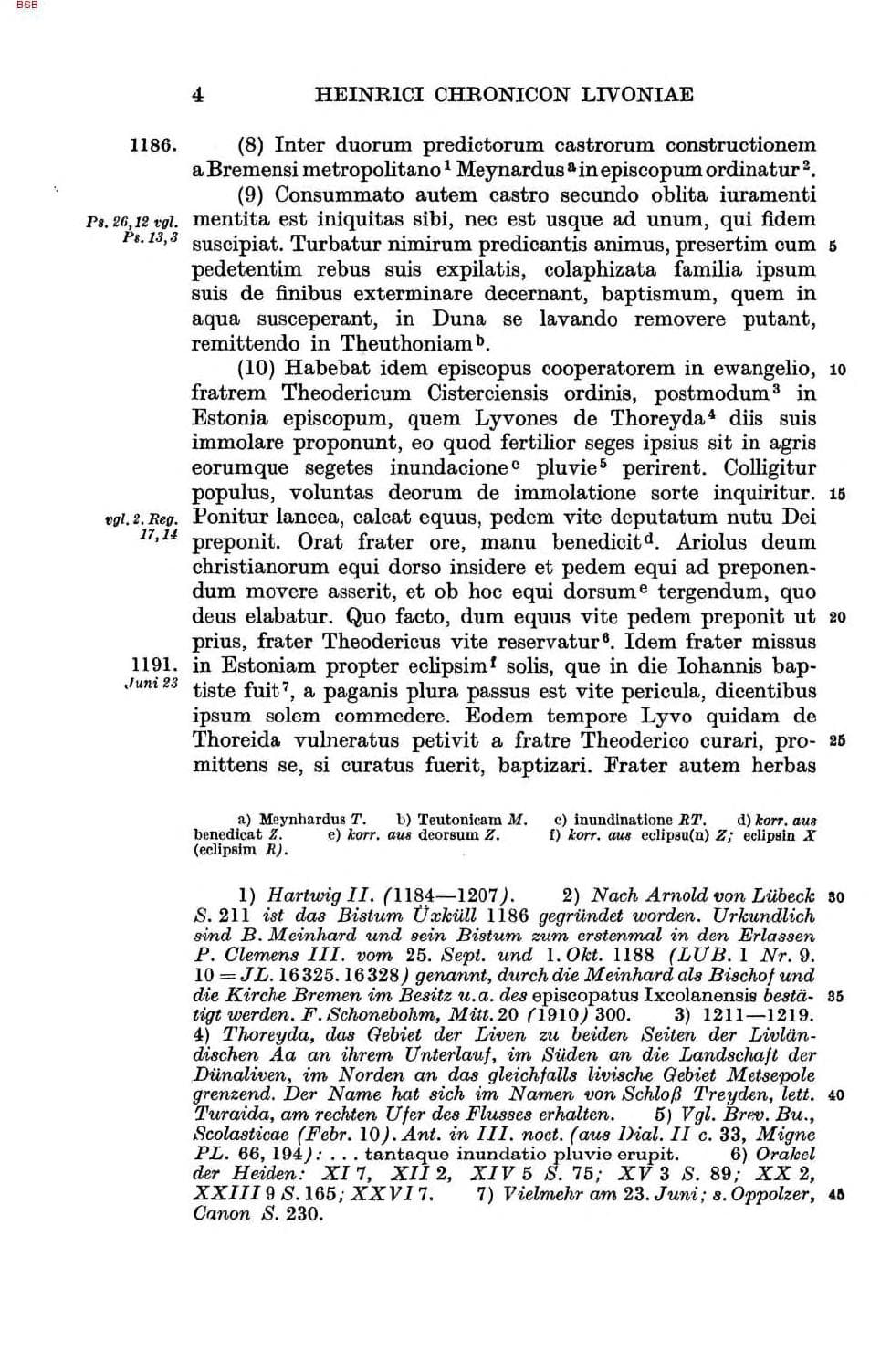
(8) Inter duorum predictorum castrorum constructione a Bremensi metropolitano Meynardus in episcopum ordinatur. (9) Consummato autem castro secundo oblita iuramenti mentita est iniquitas sibi, nec est usque ad unum, qui fidem suscipiat. Turbatur nimirum predicantis animus, presertim cum pedetentim rebus suis expilatis, colaphizata familia ipsum suis de finibus exterminare decernant, baptismum, quem in aqua susceperant, in Duna se lavando removere putant, remittendo in Theuthoniam. (10) Habebat idem episcopus cooperatorem in ewangelio, fratrem Theodericum Cisterciensis ordinis, postmodum in Estonia episcopum, quem Lyvones de Thoreyda diis suis immolare proponunt, eo quod fertilior seges ipsius sit in agris eorumque segetes inundacione pluvie perirent. Colligitur populus, voluntas deorum de immolacione sorte inquiritur. Ponitur lancea, calcat equus, pedem vite deputatum nutu Dei preponit. Orat frater ore, manu benedicit. Ariolus deum christianorum equi dorso insidere et pedem equi ad preponendum movere asserit, et ob hoc equi dorsum e tergendum, quo deus elabatur. Quo facto, dum equus vite pedem preponit ut prius, frater Theodericus vite reservatur. Idem frater missus in Estoniam propter eclipsim solis, que in die Iohannis baptiste fuit, a paganis plura passus est vite pericula, dicentibus ipsum solem comedere. Eodem tempore Lyvo quidam de Thoreida vulneratus petivit a fratre Theoderico curari, promittens se, si curatus fuerit, baptizari. Frater autem herbas

English Translation
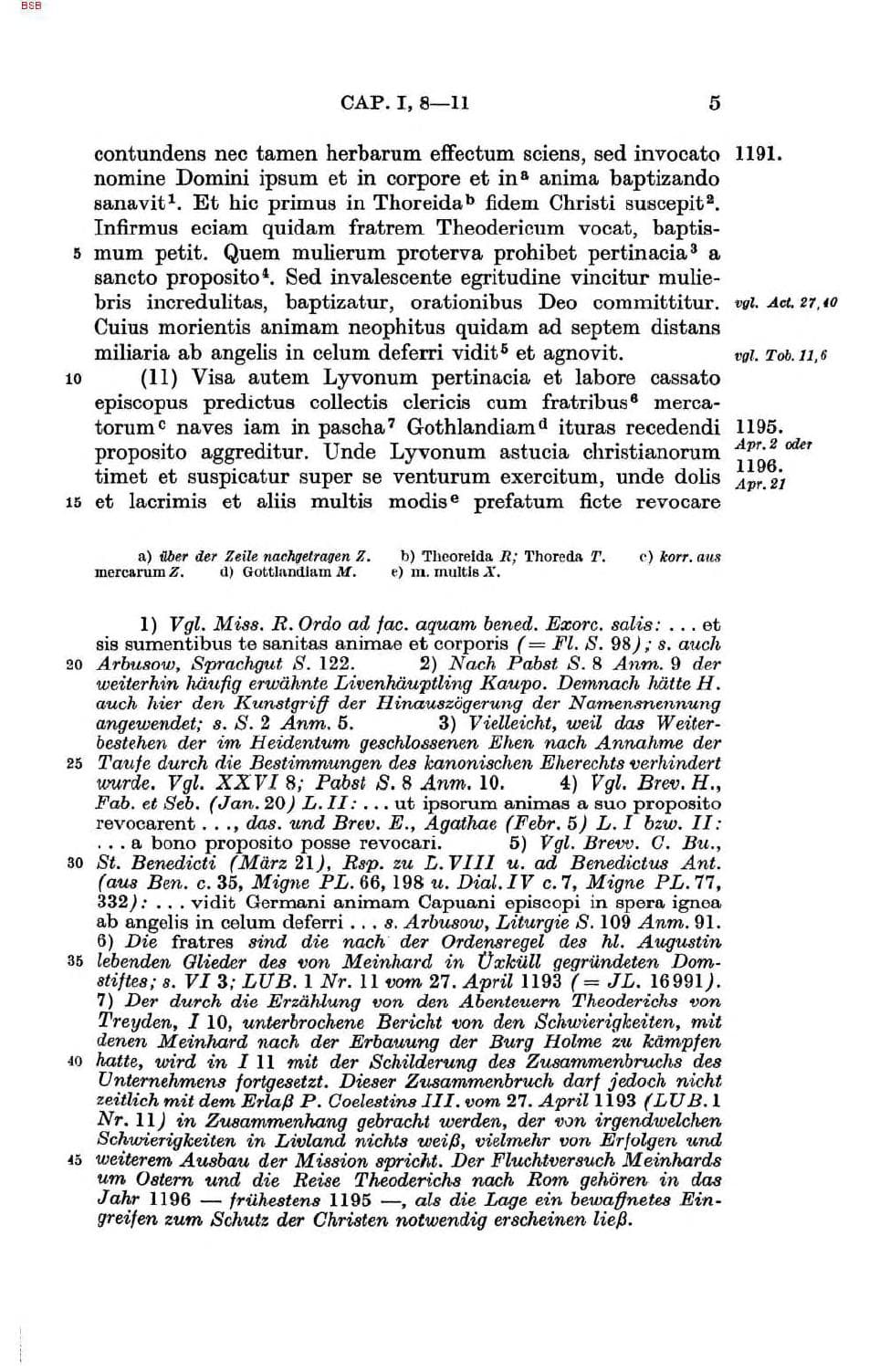
(8) During the construction of the two aforementioned castles [1186], Meinhard was ordained as bishop by the Archbishop of Bremen. [Meinhard was consecrated as the first Bishop of Üxküll (later Livonia) by Archbishop Hartwig II of Bremen (1184-1207). This gave the Livonian mission formal ecclesiastical authority under the Province of Bremen.] (9) But when the second castle was completed, wickedness lied to itself, forgetting its oath, and there was not even one who would accept the faith. The preacher's spirit was greatly troubled, especially as they gradually plundered his possessions, beat his household, and resolved to drive him out of their territory. They believed they could wash away the baptism they had received in water by bathing in the Daugava, thus sending it back to Germany. [This passage reveals the Livonians' understanding of baptism as a physical substance that could be literally washed off. The image of converts bathing in the Daugava to "return" their baptism to Germany is a striking example of cultural misunderstanding between Christian missionaries and pagan peoples.] (10) The same bishop had as a co-worker in the Gospel Brother Theoderic of the Cistercian Order — later Bishop in Estonia — whom the Livonians of Treiden proposed to sacrifice to their gods, because his crops in the fields were more fertile while theirs perished from flooding rain. The people gathered, and the will of the gods concerning the sacrifice was sought by casting lots. A lance was placed, and a horse stepped over it — by the nod of God, it put forward the foot designated for life. The brother prayed with his mouth and blessed with his hand. The soothsayer declared that the Christian god was sitting on the horse's back and guiding the horse's foot, and for this reason the horse's back must be wiped clean so the god would slip off. When this was done and the horse again put forward the foot of life, Brother Theoderic was preserved alive. The same brother, sent to Estonia, suffered many mortal dangers from the pagans on account of a solar eclipse which fell on the feast of John the Baptist [June 24, 1191], as they said he was eating the sun. Around the same time, a certain Livonian of Treiden who had been wounded asked Brother Theoderic to heal him, promising that if he were healed he would be baptized. The brother, using herbs... [The horse divination scene is one of the most ethnographically valuable passages in the chronicle. The Livonian method of determining the gods' will by having a horse step over a lance (right foot = life, left = death) is attested in other Baltic and Germanic sources. The solar eclipse of June 24, 1191 is astronomically verified, providing an exact date anchor for the narrative.]
Page p0055 of 222
Page p005

Original (Latin)

contundens nec tamen herbarum effectum sciens, sed invocato nomine Domini ipsum et in corpore et in anima baptizando sanavit. Et hic primus in Thoreida fidem Christi suscepit. Infirmus eciam quidam Theodericum vocat, baptismum petit. Quem mulierum proterva prohibet pertinacia a sancto proposito. Sed invalescente egritudine vincitur muliebris incredulitas, baptizatur, orationibus Deo committitur. Cuius morientis animam neophitus quidam ad septem distans miliaria ab angelis in celum deferri vidit et agnovit. (11) Visa autem Lyvonum pertinacia et labore cassato episcopus predictus collectis clericis cum fratribus mercatorum naves iam in pascha Gothlandiam ituras recedendi proposito aggreditur. Unde Lyvonum astucia christianorum timet et suspicatur super se venturum exercitum, unde dolis et lacrimis et aliis multis modis prefatum ficte revocare

English Translation
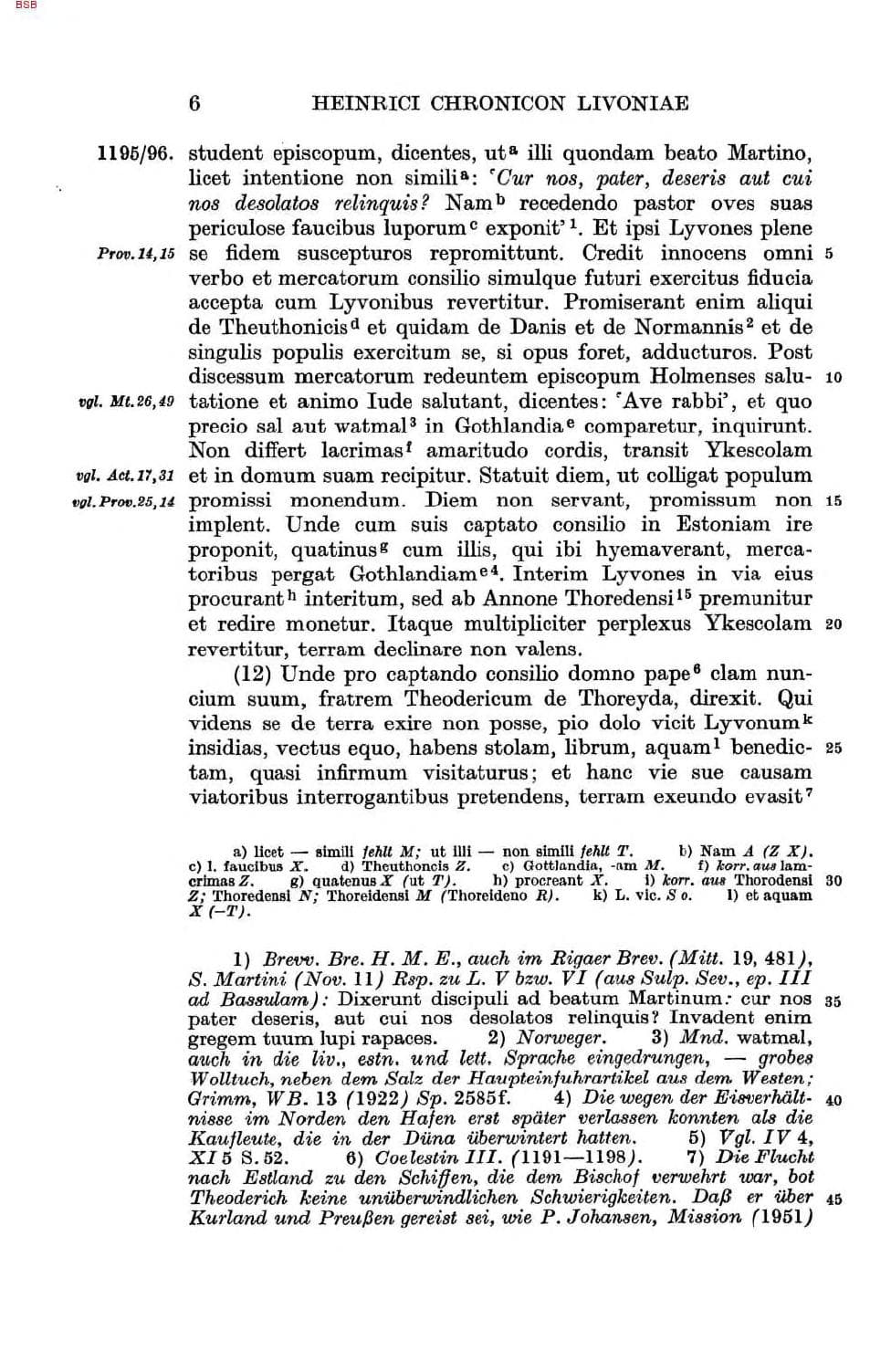
...crushing them — yet not knowing the power of the herbs but rather invoking the name of the Lord — healed the man both in body and soul by baptizing him. And this man was the first in Treiden to accept the faith of Christ. Another sick man also called for Theoderic and asked for baptism, but the stubborn obstinacy of women [his female relatives] prevented him from his holy purpose. However, as the illness worsened, the women's unbelief was overcome: he was baptized and commended to God in prayers. A certain neophyte [newly baptized Christian], living seven miles distant, saw and recognized the soul of this dying man being carried to heaven by angels. [Treiden (Turaida) was a Livonian stronghold on the river Gauja, about 50 km northeast of Riga. The passage about women blocking baptism likely reflects the role of women as guardians of traditional religious practices in Livonian society. The vision of angels carrying a soul to heaven is a standard hagiographic motif, but Henry attributes it to a named convert, grounding it in his community.] (11) But when the bishop saw the Livonians' stubbornness and his labor come to nothing, he gathered his clergy and, together with the merchants' brothers, approached the ships that were about to depart for Gotland at Easter, intending to leave. Whereupon the cunning Livonians, fearing and suspecting that a Christian army would come against them, with deceit and tears and many other means tried to call back the aforesaid [bishop] under false pretenses... [This passage dates to approximately 1195-1196. Bishop Meinhard, frustrated by the Livonians' broken promises, attempts to leave. The Livonians' fear of a retaliatory crusading army proves well-founded — within a decade, exactly such an army would arrive under Bishop Albert. The mention of Easter ships to Gotland reflects the seasonal rhythm of medieval Baltic navigation: ships departed in spring when the ice melted and returned in autumn before the freeze.]
Page p0066 of 222
Page p006

Original (Latin)

student episcopum, dicentes, ut illi quondam beato Martino, licet intentione non simili: 'Cur nos, pater, deseris aut cui nos desolatos relinquis? Nam recedendo pastor oves suas periculose faucibus luporum exponit'. Et ipsi Lyvones plene se fidem suscepturos repromittunt. Credit innocens omni verbo et mercatorum consilio simulque futuri exercitus fiducia accepta cum Lyvonibus revertitur. Promiserant enim aliqui de Theutonicis et quidam de Danis et de Normannis et de singulis populis exercitum se, si opus foret, adducturos. Post discessum mercatorum redeuntem episcopum Holmenses salutatione et animo lude salutant, dicentes: 'Ave rabbi', et quo precio sal aut watmal in Gothlandia comparetur, inquirunt. Non differt lacrimas amaritudo cordis, transit Ykescolam et in domum suam recipitur. Statuit diem, ut colligat populum promissi monendum. Diem non servant, promissum non implent. Unde cum suis captato consilio in Estoniam ire proponit, quatinus cum illis, qui ibi hyemaverant, mercatoribus pergat Gothlandiam. Interim Lyvones in via eius procurant heritum, sed ab Annone Thoredenssi premunitor et redire monetur. Itaque multipliciter perplexus Ykescolam revertitur, terram declinare non valens. (12) Unde pro captando consilio domno pape clam nuncium suum, fratrem Theodericum de Thoreyda, direxit. Qui videns se de terra exire non posse, pio dolo vicit Lyvonum insidias, vestus equo, habens stolam, librum, aquam benedictam, quasi infirmum visitaturus; et hanc vie sue causam viatoribus interrogantibus pretendens, terram exeundo evasit

English Translation
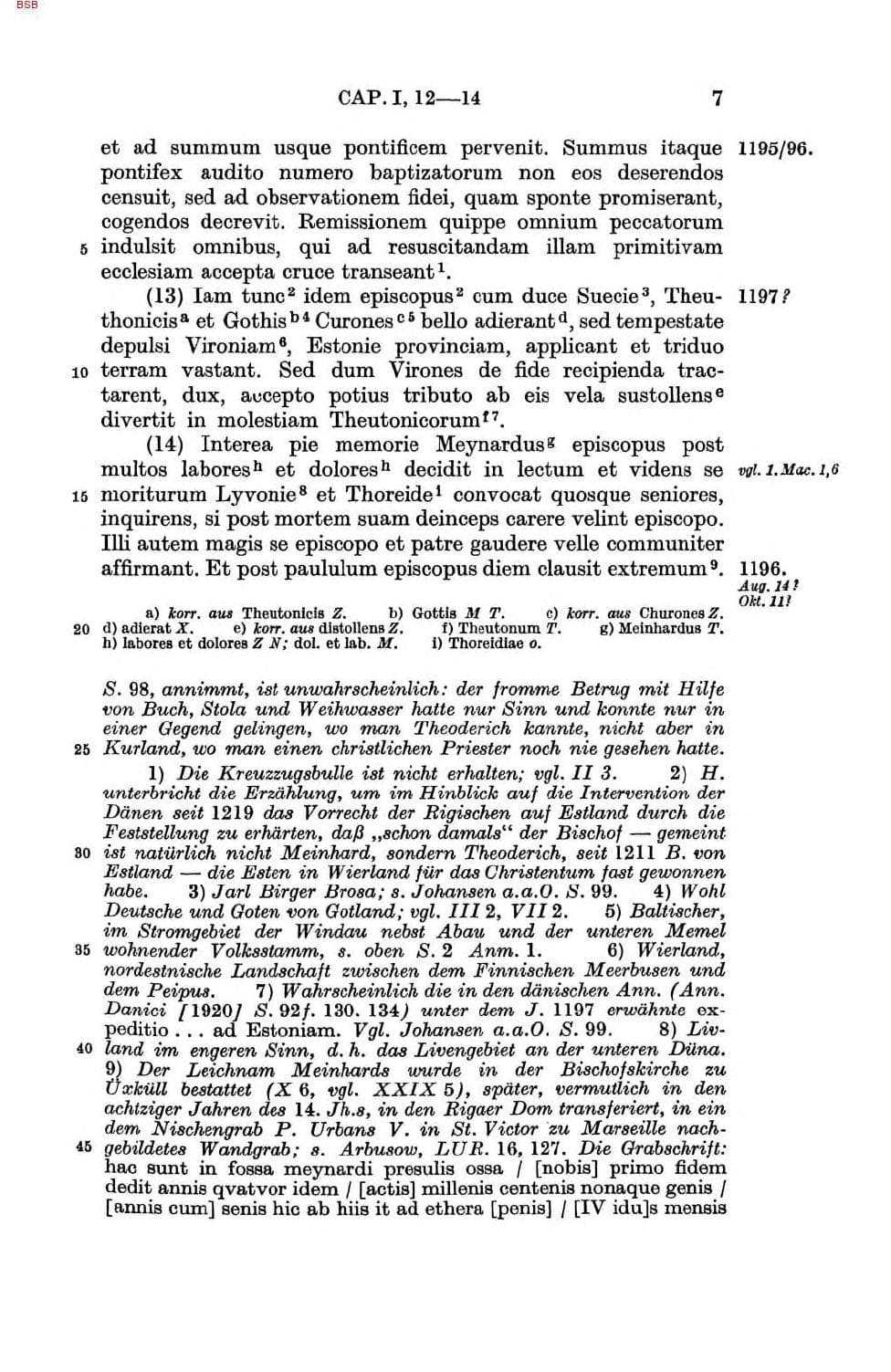
...detained the bishop, saying to him — as men once said to the blessed Martin, though not with the same sincerity: "Why do you abandon us, father, or to whom do you leave us desolate? For by departing, the shepherd exposes his sheep to the jaws of wolves." And the Livonians themselves fully promised again that they would accept the faith. The innocent man believed every word, and, encouraged by the merchants' counsel and the promise of a future army, he returned to the Livonians. For some of the Germans, and certain Danes and Norwegians, had promised to bring an army from various peoples if need be. After the merchants departed, the people of Holme greeted the returning bishop with mocking salutation and spirit, saying: "Hail, Rabbi!" — and asked what price salt or wadmal might fetch in Gotland. The bitterness of his heart could not hold back tears. He passed on to Üxküll and was received in his own house. He appointed a day to gather the people and remind them of their promise. They did not keep the day, nor fulfill their promise. Whereupon, taking counsel with his own men, he proposed to go to Estonia, so that he might travel on to Gotland with the merchants who had wintered there. Meanwhile the Livonians prepared an ambush on his route, but he was forewarned by Anno of Treiden and advised to turn back. And so, beset on all sides, he returned to Üxküll, unable to leave the land. [The Holmenses' greeting "Ave rabbi" (Hail, Rabbi) is a deliberate echo of Judas's betrayal of Christ in the Garden of Gethsemane (Matthew 26:49). Henry draws a direct parallel between the treacherous Livonians and Judas — a powerful rhetorical device. Their question about salt and wadmal (coarse woolen cloth) prices reveals their purely commercial interest in the Germans, contrasted with Meinhard's spiritual mission. The mention of wadmal ("watmal") reflects the medieval Baltic trade economy, where this Scandinavian cloth served as a form of currency. Year: 1195/96.] (12) Therefore, to seek counsel, he secretly sent his messenger — Brother Theoderic of Treiden — to the lord Pope. Seeing that he could not leave the land openly, Theoderic overcame the Livonians' traps by a pious ruse: mounted on a horse, carrying his stole, book, and holy water, as though he were going to visit a sick person; and offering this as the reason for his journey to travelers who questioned him, he escaped by leaving the land. [Brother Theoderic's escape "in disguise" as a priest on a sick call is both dramatic and revealing. He carried the standard equipment for administering last rites (stole, ritual book, holy water), which gave him a plausible cover story. His destination was Rome — Pope Celestine III (1191-1198). The papal response would be the authorization of a formal crusade against the Livonians. Cf. IV 4, XI 5 S. 52.]
Page p0077 of 222
Page p007

Original (Latin)

et ad summum usque pontificem pervenit. Summus itaque pontifex audito numero baptizatorum non eos deserendos censuit, sed ad observationem fidei, quam sponte promiserant, cogendos decrevit. Remissionem quippe omnium peccatorum indulsit omnibus, qui ad resuscitandam illam primitivam ecclesiam accepta cruce transeant. (13) Iam tunc idem episcopus cum duce Suecie, Theutonicis et Gothis Curones bello adierant, sed tempestate depulsi Vironiam, Estonie provinciam, applicant et triduo terram vastant. Sed dum Virones de fide recipienda tractarent, dux, accepto potius tributo ab eis vela sustollens divertit in molestiam Theutonicorum. (14) Interea pie memorie Meynardus episcopus post multos labores et dolores decidit in lectum et videns se moriturum Lyvonie et Thoreide convocant quosque seniores, inquirens, si post mortem suam deinceps carere velint episcopo. Illi autem magis se episcopo et patre gaudere velle communiter affirmant. Et post paululum episcopus diem clausit extremum.

English Translation
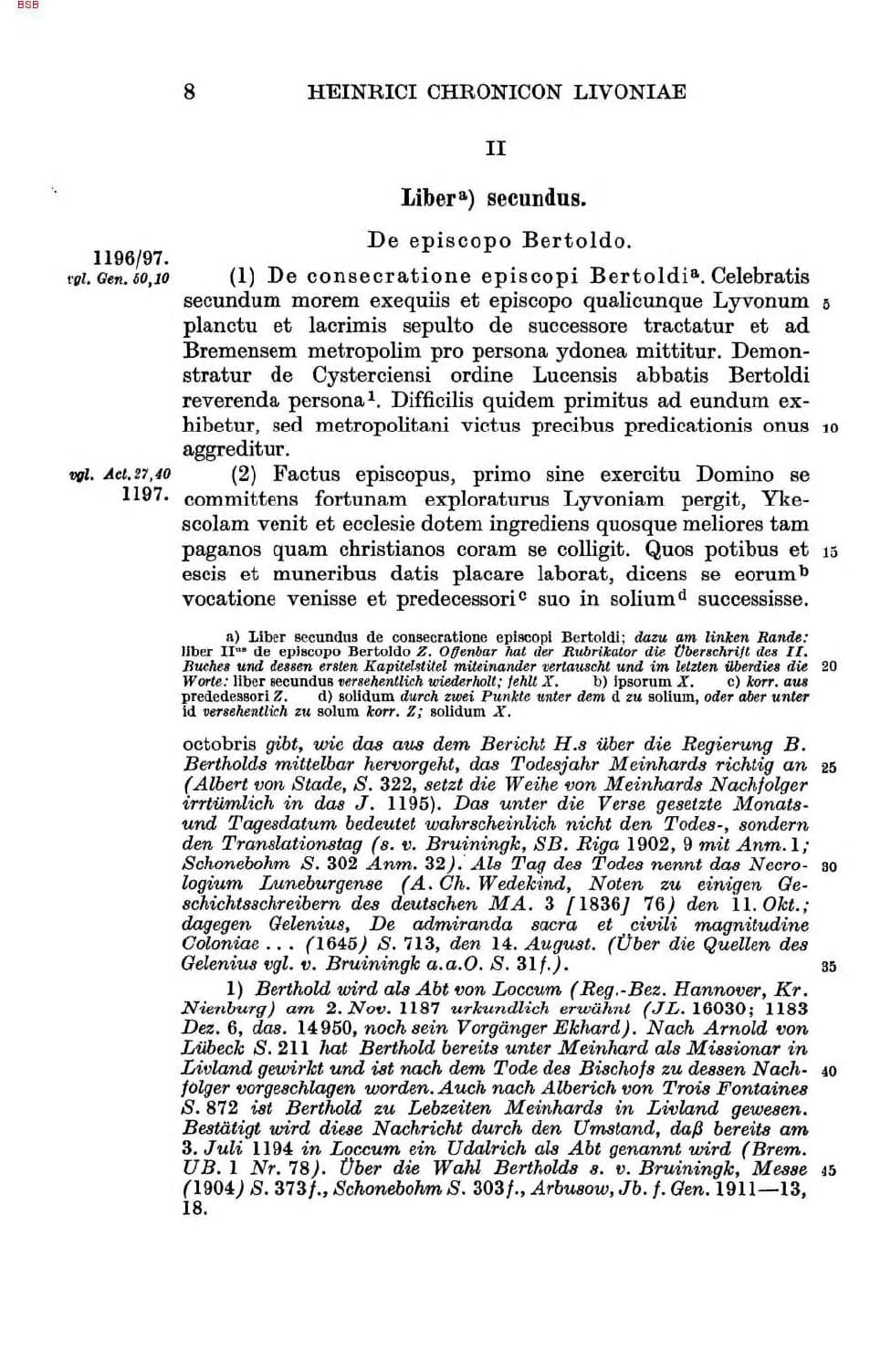
...and reached the Supreme Pontiff himself. And so the Supreme Pontiff [Pope Celestine III], having heard the number of the baptized, judged that they should not be abandoned, but decreed that they must be compelled to observe the faith which they had freely promised. Indeed, he granted remission of all sins to all who, having taken the cross, would go to revive that primitive church. [This is the papal authorization of the Livonian Crusade — a momentous turning point. Pope Celestine III (1191-1198) issued what amounted to a crusading bull, granting full indulgences to those who would take the cross and go to Livonia. The phrase "resuscitandam illam primitivam ecclesiam" (to revive that primitive church) frames the Livonian mission as restoring an ancient Christian community, though Christianity had never been established there before. Year: 1195/96.] (13) Already at that time the same bishop, together with the Duke of Sweden, Germans, and Gotlanders, had attacked the Curonians in war; but driven off course by a storm, they landed in Vironia — a province of Estonia — and laid waste to the land for three days. But while the Vironians were deliberating about accepting the faith, the duke, preferring to accept tribute from them, raised his sails and departed, to the annoyance of the Germans. [This joint Swedish-German expedition against the Curonians (Kurši, in modern western Latvia/Lithuania) was blown off course to Vironia (Virumaa, in northeastern Estonia). The Swedish duke's decision to accept tribute rather than pursue conversion reveals a fundamental tension between Scandinavian and German crusading goals: the Swedes sought political submission and tribute, while the Germans prioritized baptism. The duke is likely Duke (Jarl) Birger Brosa of Sweden. Year: 1197.] (14) Meanwhile, Bishop Meinhard of pious memory, after many labors and sorrows, fell ill and, seeing that he was about to die, summoned the elders of Livonia and Treiden, asking whether after his death they would henceforth wish to be without a bishop. They, however, commonly affirmed that they would rather rejoice in having a bishop and father. And shortly afterward, the bishop closed his last day. [Bishop Meinhard died on August 14, 1196 (some sources give October 11, 1196). He was buried in the bishop's church at Üxküll. His body was later transferred to the Riga Cathedral in the 1380s, and then to St. Victor in Marseille. Henry's phrase "pie memorie" (of pious memory) is the standard medieval formula for a recently deceased prelate. The Livonians' deathbed assurance that they wanted a bishop was, as subsequent events showed, yet another empty promise.]
Page p0088 of 222
Page p008

Original (Latin)

II Liber secundus. De episcopo Bertoldo. (1) De consecratione episcopi Bertoldi. Celebratis secundum morem exequiis et episcopo qualicunque Lyvonum planctu et lacrimis sepulto de successore tractatur et ad Bremensem metropolitam pro persona ydonea mittitur. Demonstratur de Cysterciensi ordine Lucensis abbatis Bertoldi reverenda persona. Difficilis quidem primitus ad eundum exhibetur, sed metropolitani victus precibus predicationis onus aggreditur. (2) Factus episcopus, primo sine exercitu Domino se committens fortunam exploraturus Lyvonum pergit, Ykescolam venit et ecclesie dotem ingrediens quosque meliores tam paganos quam christianos coram se colligit. Quos potibus et escis et muneribus datis placare laborat, dicens se eorum vocatione venisse et predecessori suo in solium successisse.

English Translation
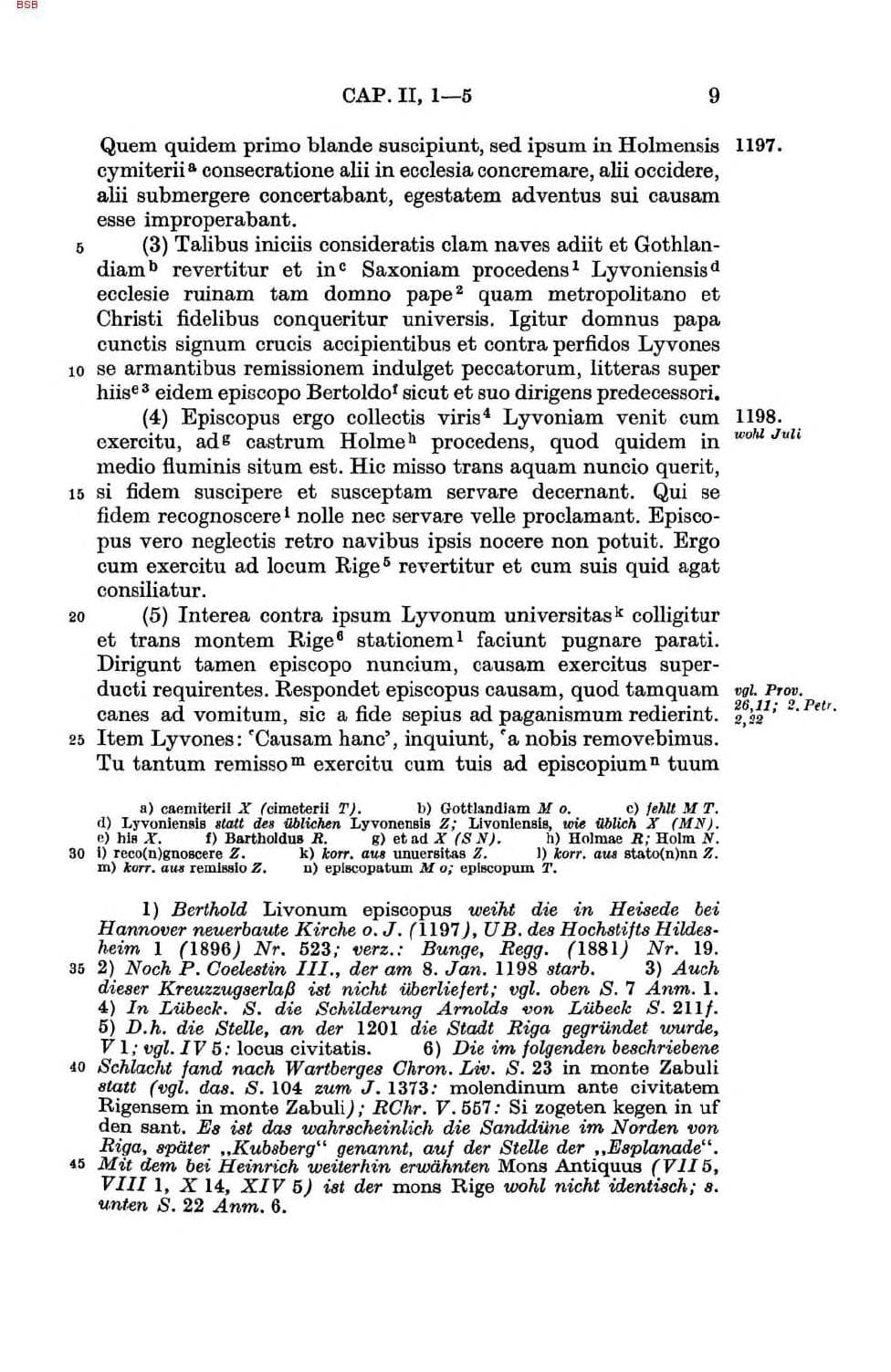
[BOOK TWO] [Chapter II: Concerning Bishop Bertold] (1) Concerning the consecration of Bishop Bertold. When the funeral rites had been celebrated according to custom and the bishop had been buried with whatever lamentation and tears the Livonians could muster, the question of a successor was taken up, and a message was sent to the Archbishop of Bremen for a suitable person. The reverend person of Bertold, Abbot of Loccum, of the Cistercian Order, was put forward. He proved reluctant at first to go, but, overcome by the metropolitan's entreaties, he undertook the burden of preaching. [Bertold was Abbot of Loccum (Kloster Loccum, in the Hanover region, Lower Saxony). He was already familiar with Livonia, having served as a missionary under Meinhard. His initial reluctance ("difficilis quidem primitus") is a common hagiographic topos — holy men were expected to resist ecclesiastical appointments to demonstrate humility. He was consecrated bishop on November 2, 1197. Year: 1196/97.] (2) Having become bishop, he first set out without an army, committing himself to the Lord, to explore the disposition of the Livonians. He came to Üxküll and, entering the church's endowment, gathered before him the best men, both pagan and Christian. He labored to placate them with drink, food, and gifts, saying that he had come at their invitation and had succeeded his predecessor on the episcopal throne. [Bertold's initial peaceful approach — arriving without soldiers and attempting to win over the Livonians with feasting and gifts — follows Meinhard's earlier strategy. The phrase "fortunam exploraturus" (to explore their fortune/disposition) suggests he already harbored doubts about the Livonians' sincerity. Year: 1197.]
Page p0099 of 222
Page p009

Original (Latin)

Quem quidem primo blande suscipiunt, sed ipsum in Holmensis cymiterii consecratione alii in ecclesia concremare, alii occidere, alii submergere concertabant, egestatem adventus sui causam esse improperabant. (3) Talibus iniciis consideratis clam naves adiit et Gothlandiam revertitur et in Saxoniam procedens Lyvoniensis ecclesie ruinam tam domno pape quam metropolitano et Christi fidelibus conqueritur universis. Igitur domnus papa cunctis signum crucis accipientibus et contra perfidos Lyvones se armantibus remissionem indulget peccatorum, litteras super hiis eidem episcopo Bertoldo sicut et suo dirigens predecessori. (4) Episcopus ergo collectis viris Lyvoniam venit cum exercitu, ad castrum Holme procedens, quod quidem in medio fluminis situm est. Hic misso trans aquam nuncio querit, si fidem suscipere et susceptam servare decernant. Qui se fidem recognoscere nolle nec servare velle proclamant. Episcopus vero neglectis retro navibus ipsis nocere non potuit. Ergo cum exercitu ad locum Rige revertitur et cum suis quid agat consiliatur. (5) Interea contra ipsum Lyvonum universitas colligitur et trans montem Rige stationem faciunt pugnare parati. Dirigunt tamen episcopo nuncium, causam exercitus superducti requirentes. Respondet episcopus causam, quod tanquam canes ad vomitum, sic a fide sepius ad paganismum redierint. Item Lyvones: 'Causam hanc,' inquiunt, 'a nobis removebimus. Tu tantum remisso exercitu cum tuis ad episcopium tuum

English Translation
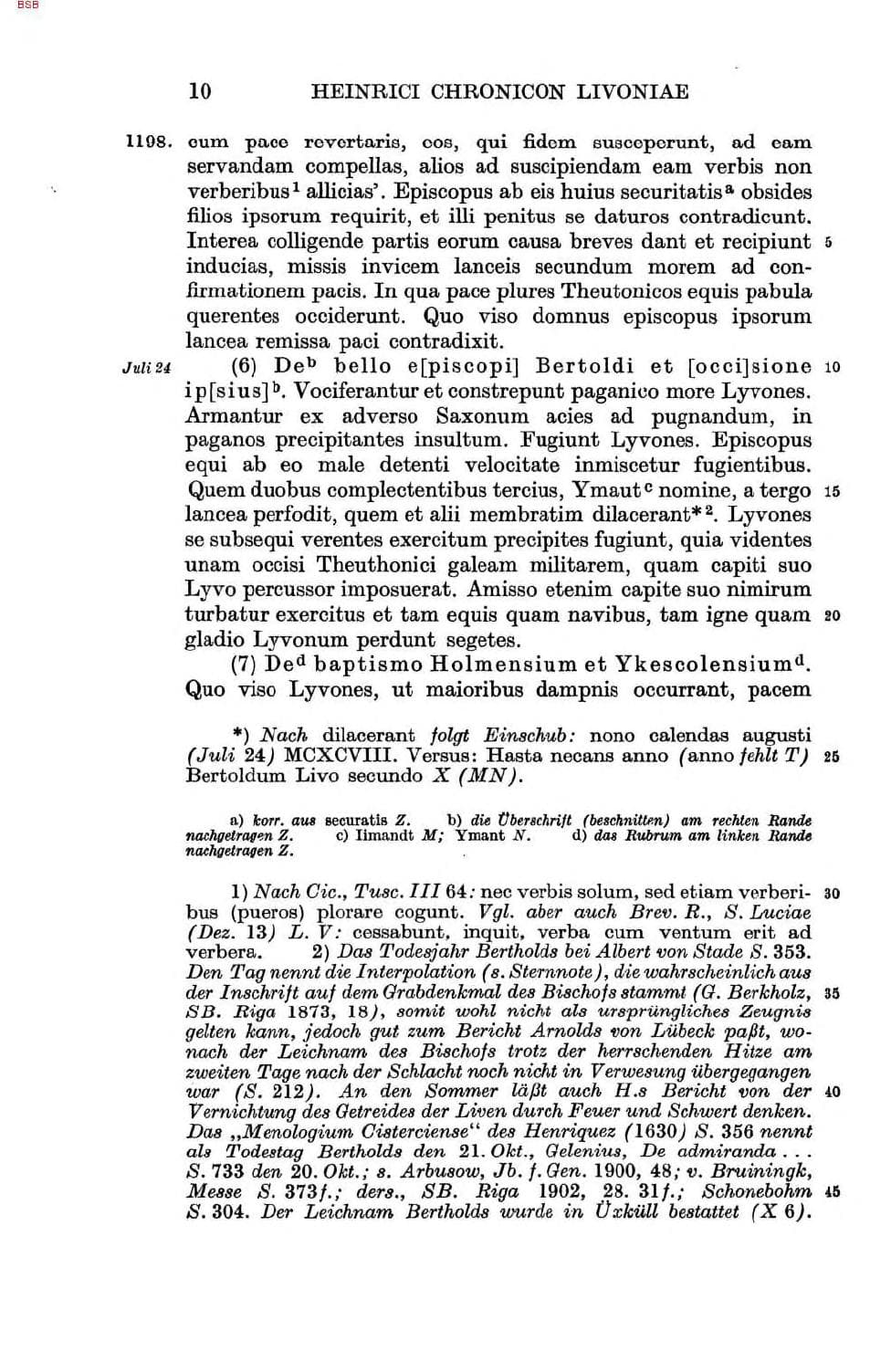
At first they received him kindly, but then at the consecration of the Holme cemetery, some plotted to burn him alive in the church, others to kill him, others to drown him — reproaching him that poverty was the real reason for his coming. [The Holmenses' varied murder plots (burning, killing, drowning) during a sacred ceremony reveal the depth of hostility toward the German bishops. Their accusation that Bertold came because of poverty — not faith — shows the Livonians saw through the spiritual veneer of the mission. Year: 1197.] (3) Considering such beginnings, he secretly went to the ships and returned to Gotland, and proceeding to Saxony, he lamented the ruin of the Livonian church to the lord Pope, the Archbishop, and all the faithful of Christ. Therefore the lord Pope granted remission of sins to all who would take the sign of the cross and arm themselves against the faithless Livonians, directing letters on these matters to Bishop Bertold just as he had to his predecessor. [Bertold's journey to seek papal support mirrors Theoderic's earlier mission. Pope Celestine III again issued crusading indulgences — this time explicitly authorizing armed force against the Livonians. The phrase "contra perfidos Lyvones" (against the faithless Livonians) marks a hardening of the papal rhetoric. The Livonians had moved from being potential converts to declared enemies of the faith.] (4) The bishop therefore, having gathered men, came to Livonia with an army and proceeded to the castle of Holme, which is situated in the middle of the river. Sending a messenger across the water, he asked whether they would resolve to accept the faith and to keep it once accepted. They proclaimed that they would neither acknowledge the faith nor keep it. But the bishop, having left his ships behind, could not harm them. Therefore he returned with the army to the place of Riga and took counsel with his men about what to do. [This is the first mention of Riga as a location ("ad locum Rige") — not yet a city, but a landing place on the Daugava. The castle of Holme (Martinsala/Salaspils) on its river island was effectively impregnable without boats. Bertold's tactical error of leaving ships behind foreshadows the military learning curve the crusaders would undergo. Year: 1198.] (5) Meanwhile, the entire community of the Livonians gathered against him and took up a position beyond the hill of Riga, prepared to fight. They nevertheless sent a messenger to the bishop, demanding the reason for the army he had brought. The bishop replied that the reason was that, like dogs returning to their vomit, they had repeatedly relapsed from the faith into paganism. The Livonians in turn said: "We will remove this cause from among us. Only send back the army and return with your men to your bishopric..." [The biblical reference to "dogs returning to their vomit" comes from Proverbs 26:11 and 2 Peter 2:22 — a standard medieval insult against apostates. The "mons Rige" (hill of Riga) likely refers to the sand dunes near the future site of the city. The Livonians' negotiating position — offering to re-accept Christianity if the army leaves — reveals their pragmatic approach to religion as a political tool. Cf. Proverbs 26:11; 2 Peter 2:22.]
Page p01010 of 222
Page p010

Original (Latin)

cum pace revertaris, cos, qui fidem susceperant, ad cam servandam compellas, alios ad suscipiendam eam verbis non verberibus allicias. Episcopus ab eis huius securitatis obsides filios ipsorum requirit, et illi penitus se daturos contradicunt. Interea colligende partis eorum causa breves dant et recipiunt inducias, missis invicem lanceis secundum morem ad confirmationem pacis. In qua pace plures Theutonicis equis pabula querentes occiderunt. Quo viso domnus episcopus ipsorum lancea remissa paci contradixit. (6) De bello episcopi Bertoldi et occisione ipsius. Vociferantur et constrepunt paganico more Lyvones. Armantur ex adverso Saxonum acies ad pugnandum, in paganos precipitantes insultum. Fugiunt Lyvones. Episcopus equi ab eo male detenti velocitate inmiscetur fugientibus. Quem duobus complectentibus tercius, Ymaut nomine, a tergo lancea perfodit, quem et alii membratim dilacerant. Lyvones se subsequi verentes exercitum precipites fugiunt, quia videntes unam occisi Theutonici galeam militarem, quam capiti suo Lyvo percussor imposuerat. Amisso etenim capite suo nimirum turbatur exercitus et tam equis quam navibus, tam igne quam gladio Lyvonum perdunt segetes. (7) De baptismo Holmensium et Ykescolensium. Quo viso Lyvones, ut maioribus dampnis occurrant, pacem

English Translation

..."return in peace, compel those who accepted the faith to keep it, and attract others to accept it with words, not blows." The bishop demanded their sons as hostages for this security, but they flatly refused to give them. Meanwhile, for the purpose of gathering their forces, they gave and received a brief truce, exchanging lances according to custom as confirmation of peace. During this peace, many Livonians killed Germans who were seeking fodder for their horses. When the lord bishop saw this, he sent back their lance and repudiated the peace. [The exchange of lances as a peace guarantee was a Baltic legal custom — a form of treaty ratification through symbolic exchange. The Livonians' violation of the truce by killing foraging Germans was a calculated provocation. The bishop's return of the lance formally declared the end of the peace. Year: 1198.] (6) Concerning the battle of Bishop Bertold and his death. The Livonians cried out and made a din in their pagan manner. On the opposing side, the Saxon battle lines armed themselves for combat and hurled themselves in an assault against the pagans. The Livonians fled. But the bishop, carried away by the speed of his poorly controlled horse, became entangled among the fleeing enemy. While two men seized him, a third — Ymaut by name — pierced him from behind with a lance, and others tore him limb from limb. The Livonians, fearing that the army would pursue them, fled headlong, because they saw that one of the slain Germans' military helmets had been placed on the head of the Livonian who had struck the killing blow. For having lost their leader, the army was greatly shaken, but with horses and ships, with fire and sword, they destroyed the Livonians' crops. [The death of Bishop Bertold on July 24, 1198, is one of the most dramatic episodes in the chronicle. His horse bolted into the enemy lines — a detail that emphasizes the chaos of the battle. Henry names the killer: Ymaut, a Livonian. The dismemberment of the bishop's body reflects the rage of the Livonians. Despite losing their bishop, the crusading army exacted revenge by devastating the Livonians' grain fields — a form of economic warfare that would force submission through starvation. Bertold was buried in the bishop's church at Üxküll.] (7) Concerning the baptism of the people of Holme and Üxküll. When the Livonians saw this, in order to forestall greater losses, they sought peace... [This section heading marks the aftermath of Bertold's death. The Livonians, their crops destroyed, would be forced to accept baptism — but as Henry's narrative has repeatedly shown, such coerced conversions rarely held. Year: 1198.]

Loading more pages… (10 of 222 loaded)